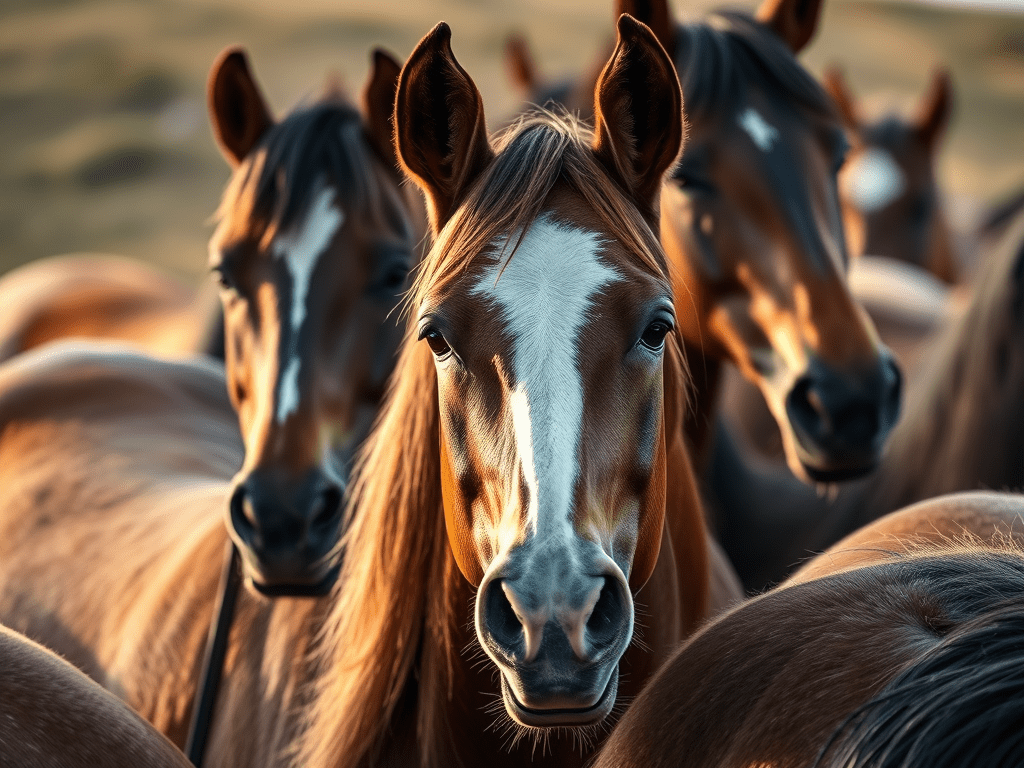
Horses are complex and intelligent animals with their own unique ways of communicating and interacting with the world. Understanding their natural behaviours is not just fascinating; it’s absolutely crucial for effective and safe equine husbandry. In this second blog post, we’ll explore some fundamental aspects of horse behaviour.
Horses are prey animals by nature. This fundamental fact dictates much of their behaviour. They are wired for flight, and their senses are incredibly acute, constantly scanning for potential threats. This explains why they can be easily startled and why sudden movements or loud noises can trigger a strong reaction. Building trust with your horse involves understanding and respecting this innate instinct.
They are also highly social animals. In the wild, horses live in herds, and this social structure provides security and a sense of belonging. This inherent need for companionship means that keeping a single horse in isolation can lead to stress and behavioural issues. Providing opportunities for social interaction, whether with other horses or even other compatible livestock, is important for their mental well-being (American Association of Equine Practitioners, 2022).
Key behavioural cues to look for:
- Body Language: A horse’s ears, eyes, nostrils, and tail can tell you a lot about its mood. Forward ears often indicate alertness, pinned ears can signal irritation, and a swishing tail might mean annoyance.
- Vocalizations: Whinnies, nickers, snorts, and squeals all have different meanings and can communicate various states, from greetings to distress.
- Flight vs. Fight: While flight is their primary defence, horses can and will defend themselves if cornered or feeling threatened. Recognizing the signs of aggression (e.g., flattened ears, baring teeth, kicking) is vital for safety.
By observing and learning to interpret these cues, you’ll be better equipped to understand your horse’s needs, anticipate their reactions, and build a strong, respectful relationship.
Next up: The cornerstone of good health – Feed and Water!
 Equine Vet Tech
Leave a comment